A Renter Bedroom Refresh Under $100: A Spending-Cap Plan
· SmallSpace AI Editorial
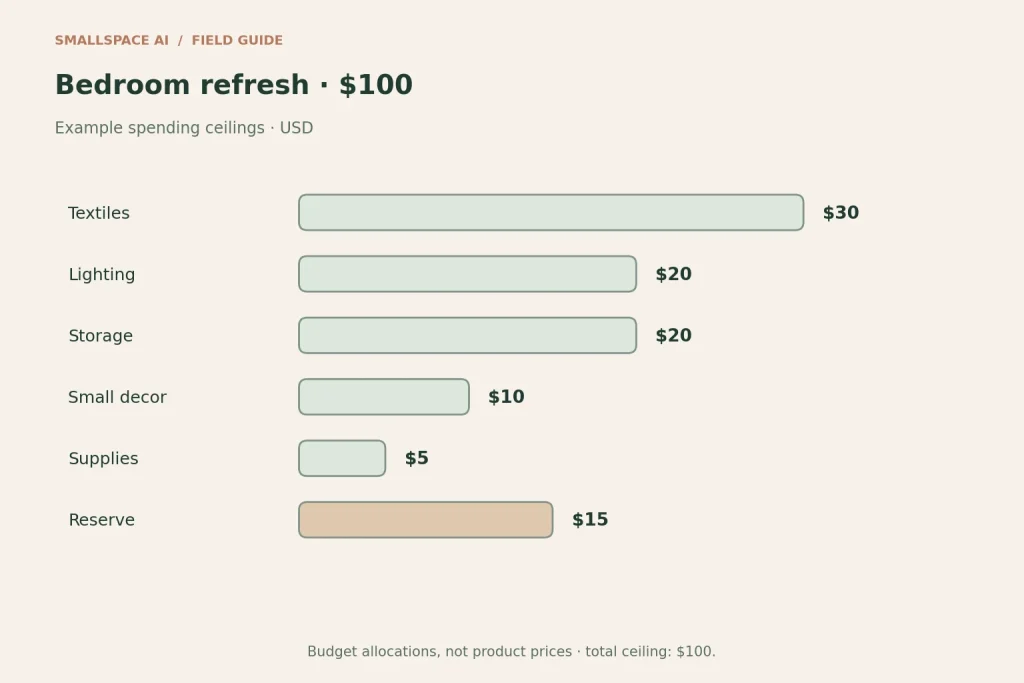
Illustration: an explanatory diagram, not a photograph or a construction drawing.
A $100 bedroom refresh is realistic only when its scope is modest. This plan assumes you already have a usable bed, mattress and essential furniture. It is a spending framework for small changes, not a promise that a complete furnished bedroom can be purchased for $100.
All amounts below are US-dollar budget caps, not checked product prices or shopping offers. Compare your actual local checkout totals, including tax and delivery, before buying. If an item cannot be found within its allocation, reuse what you have or skip it.
Fix the layout before spending
Clear the floor and move everyday belongings into their intended storage. Open drawers and check access around the bed. A new blanket will not solve a bedside table that blocks the wardrobe, and a storage box is not useful if it cannot be retrieved.
Use our 8×10 bedroom layout guide as a starting point when the proportions are relevant, then adapt to your own door and window positions. The layouts are illustrative, not a substitute for your measurements.
Divide the ceiling before browsing
- Textiles: up to $30 for one change, such as compatible bedding or a throw.
- Lighting: up to $20 for a suitable small lamp or a compatible replacement bulb.
- Storage: up to $20 for the specific remaining organisation problem.
- Small decor: up to $10, using existing frames or objects where possible.
- Finishing supplies: up to $5 for an item actually needed by the chosen project.
- Tax, delivery and contingency: keep $15 uncommitted.
These caps total $100. They are not six required purchases. Moving money between categories is fine if the final checkout total stays below the ceiling. Avoid using the reserve early simply because an extra accessory is inexpensive.
Choose one textile change with a clear role
Start with what feels uncomfortable, worn or visually distracting. Measure the bed and confirm sizes before purchasing. A throw can change the appearance of existing bedding, but it will not replace bedding that needs replacing for practical reasons.
Work with one or two colours already present in the room. This reduces the temptation to replace curtains, cushions and storage solely to match a new purchase. Check care instructions and any return restrictions before committing the textile allocation.
Spend the storage allocation on retrieval
Choose the item that is currently hardest to put away. If it is spare bedding, first measure under-bed access. If it is clothes needed daily, an easily reached basket on an existing shelf may be better than a larger box under the bed.
Buy one organiser first and use it for several days. A multi-pack is not a saving when half the containers do not fit. Reuse clean containers you already own when they suit the contents and location.
Keep lighting changes simple
If the main problem is reading at night, direct the lighting allocation towards that task. Use an intact product appropriate for your location and electrical supply, and follow lamp and bulb specifications. Do not include DIY wiring or improvised fixtures in a budget refresh.
Try repositioning an existing lamp before buying another. Check where its cable will run so the new position does not create a trip or snag point.
Stop when the chosen problems are solved
Before each purchase, write down the problem it addresses and its delivered cost. At the end, compare the room with your original list: easier storage, usable access, a suitable light and a more coherent appearance. Unspent money is a successful outcome too.
For changes requiring no purchase, start with making a small bedroom feel bigger without renovating. The illustration shows the budget allocation; it does not represent a retailer’s offer.
Leave a Reply