Container Gardening for Beginners: Your First Balcony Setup
· SmallSpace AI Editorial
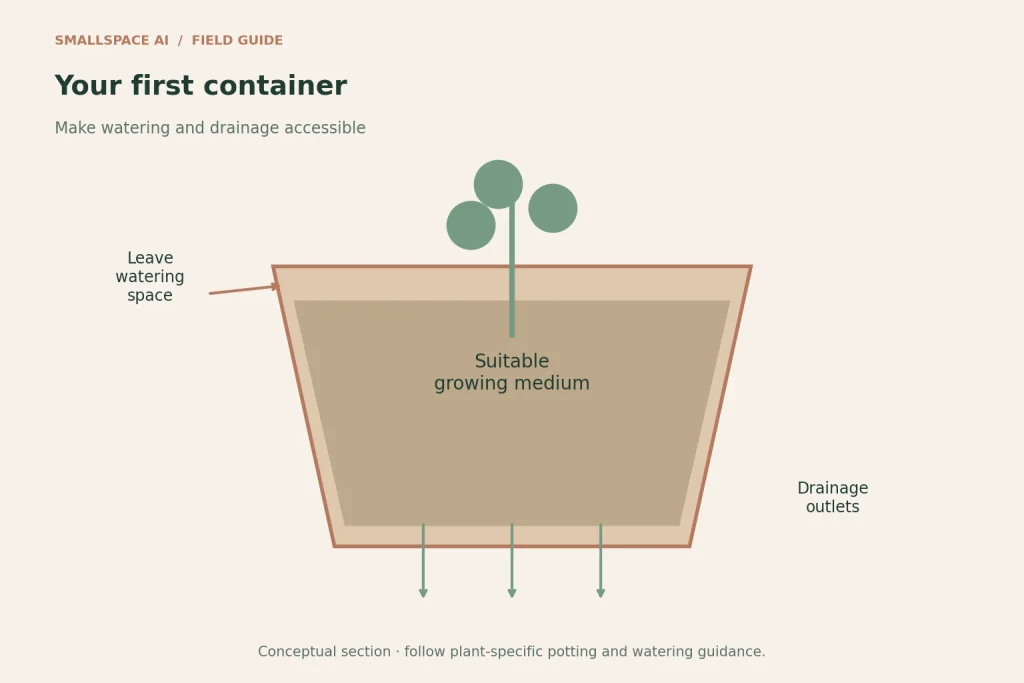
Illustration: an explanatory diagram, not a photograph or a construction drawing.
Your first container garden needs a manageable routine more than a large shopping list. Start with a few suitable plants and containers you can inspect, water and maintain. A small collection gives you room to learn without turning every spare surface into another watering task.
If the garden will sit on a balcony, establish the building’s restrictions and permitted loading first. This guide does not determine structural capacity or approve rail-mounted planters. Keep containers inside the permitted area and retain access to doors and drainage.
Observe the location before buying
Record direct sun and shade at different times, along with wind exposure and access to water. A sheltered-looking corner can still receive very little light, while a sunny position may dry out quickly. Match plants to the conditions you have rather than buying plants first and hoping they adapt.
Note who will check the pots when you are away. If the routine depends on moving a heavy container each day, choose a more accessible position or a smaller collection.
Choose a plant, then its container
Check the plant’s expected size and root requirements. Select a suitable container with drainage rather than choosing purely by colour. The RHS container guide explains that materials and shape affect handling and care; containers are not interchangeable simply because their outside dimensions look similar.
Use growing medium suited to the selected plant. Ordinary soil dug from elsewhere is not an automatic substitute for an appropriate container mix. Follow product and plant instructions, including any feeding guidance, rather than adding several fertilisers at once.
Keep the starter kit short
- A small number of clearly identified plants suited to the position.
- Suitable containers with functioning drainage.
- The correct growing medium for those plants.
- A manageable watering can and a way to control runoff.
- Labels and a place to record observations.
You may already own some of these items. Reuse containers only when they are sound, clean and suitable for the purpose. Avoid vessels with an unknown chemical history, particularly when growing edible plants.
Plant one container carefully
Arrange the plant at an appropriate depth and leave the watering space recommended for the setup. Follow the specific planting instructions rather than burying every plant more deeply to make it feel secure. The RHS step-by-step planting guide provides a practical sequence for positioning plants, adding compost and watering them in.
Place the finished container where you can check it easily. Do not add decorative covers that conceal persistent standing water or prevent access to the pot. Make sure runoff will not spill onto neighbours or leave a slippery walking surface.
Water according to the pot and conditions
Check the growing medium rather than following a fixed weekly schedule for every plant. Sun, wind, plant size and container characteristics affect how quickly water is used. Different pots in the same collection may need attention at different times.
The RHS watering guide recommends checking moisture and watering carefully near the compost. Use a can you can carry comfortably, and adjust the routine to the plant’s needs. More water is not always a cure for a struggling plant.
Observe before expanding
Keep notes on growth, watering and any persistent problem. Photograph changes for comparison. If a plant declines, identify the cause before buying several replacements for the same location. Plant-specific advice is more useful than assuming every yellow leaf has one explanation.
Add another container only when the existing routine is manageable and there is still usable space. Our balcony layout guide helps preserve access, while the herb starter guide applies the same small-start approach to plants you may use in the kitchen.
Leave a Reply