Small Bedroom Storage Ideas for Renters With No Closet Space
· SmallSpace AI Editorial
Quick answer
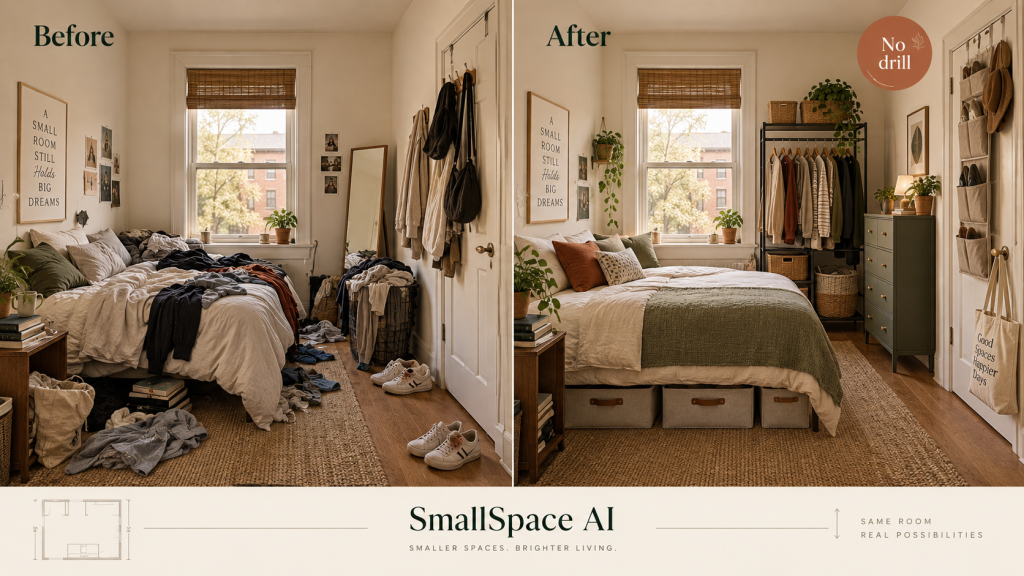
If your small bedroom has no closet, do not solve the problem by scattering storage around every wall. Build one clear wardrobe zone, hide low-frequency items under the bed, use the back of the door for light everyday items, and keep a small reset area for clothes that are in use.
Who this is for
This guide is for renters with small bedrooms and little or no built-in wardrobe space, especially when drilling, built-ins, or permanent changes are not allowed.
Measure before you buy
- The longest uninterrupted wall.
- The space under your bed, including height.
- Door width and swing.
- The narrowest walking path around the bed.
- The depth available for a dresser, rack, or wardrobe.
Choose one main clothing system
| System | Floor space | Visual clutter | Best for |
|---|---|---|---|
| Open garment rack | Low–Medium | High | Small edited wardrobes |
| Freestanding wardrobe | Medium | Low | Renters who want clothes hidden |
| Low dresser | Medium | Low | Mostly folded clothing |
| Rolling rack + drawers | Medium | Medium | Flexible rooms |
1. Turn one wall into the wardrobe wall
Choose one wall for most clothing storage instead of adding a rack in one corner, a dresser on another wall, and baskets everywhere else. A single wardrobe wall makes the room easier to read and keeps the other walls visually quieter.
If you use an open rack, limit what stays visible. Keep your most frequently worn or visually calm pieces on the rail and move overflow into drawers, bins, or seasonal storage.
2. Use under-bed space for low-frequency items
Under-bed storage works best for spare bedding, off-season clothing, luggage accessories, and other items you do not need several times a day. Choose containers that slide fully under the frame so the floor still looks clear.
3. Use the door, but do not overload it
An over-door rack can hold bags, robes, scarves, or tomorrow’s outfit without taking floor space. Keep heavy or bulky items off the door so it still opens comfortably and hardware is not stressed.
4. Create a daily reset zone
Most bedrooms become messy because there is nowhere for clothes that are not clean enough for the wardrobe but not ready for laundry. Give those pieces one designated hook, basket, or valet stand. One reset point is easier to maintain than five accidental piles.
5. Put shoes low and contained
Shoes create visual clutter quickly. Use one low rack, tray, or under-bed section. Avoid tall open towers near the doorway because they can make the room feel narrower.
6. Choose storage by depth, not just capacity
A deep dresser may store more but destroy circulation. In a tight bedroom, a shallower piece that preserves the walkway can be the better choice. Measure the room with drawers and doors open, not only closed.
7. Use vertical space without permanent construction
If drilling is prohibited, consider tension systems, freestanding ladder shelves, tall narrow bookcases, or removable hooks rated for their intended load. Always follow the manufacturer’s surface and weight instructions.
8. Hide the visual noise
Open storage is convenient but every visible item becomes part of the room’s visual field. Use matching hangers, a curtain around an open rack, lidded bins, or a wardrobe with doors to calm the room. You do not need to hide everything, only the bulk.
9. Rotate seasonally before adding more furniture
If the room has to hold winter coats, summer clothes, luggage, bedding, and daily clothing at the same time, storage will always feel full. Rotate categories before buying a second dresser or another rack.
What to avoid
- Multiple tiny storage units that consume more floor than one useful piece.
- Adhesive hooks used beyond their rated weight.
- Blocking a radiator, vent, or window with storage.
- Buying a wardrobe before checking door and drawer clearance.
- Using every empty wall and making the room feel like a stockroom.
A simple no-closet setup
For many renters, the most practical combination is one main wardrobe or rack, one low dresser or drawer unit, under-bed bins, and a single door-based accessory system. That covers hanging, folded, seasonal, and everyday items without turning every surface into storage.
Choose storage by wardrobe size and room depth
| Your situation | Best starting system | Watch out for |
|---|---|---|
| Small capsule wardrobe | Open rack + under-bed bins | Visible clutter if the rail is overfilled |
| Mostly hanging clothes | Freestanding wardrobe | Door swing and furniture depth |
| Mostly folded clothes | Shallow dresser + bins | Drawer clearance into the walkway |
| Seasonal overflow | Under-bed + high freestanding storage | Keeping daily items easy to reach |
Do a capacity test before buying more furniture
Count what actually needs to live in the bedroom: hanging items, folded items, shoes, bedding, bags, and seasonal pieces. Then assign each category to one storage zone. If one wardrobe wall, one under-bed zone, and one small accessory zone can hold the list, adding another dresser usually costs more floor space than it solves.
Safety matters with tall renter storage
Tall freestanding units can be useful in small rooms, but they also need to be stable. Follow the manufacturer’s anti-tip and load guidance, especially around children or pets. If the recommended fixing method conflicts with your lease, choose a lower or inherently stable unit rather than improvising a mounting method.
Next guides
For a room that still feels cramped after organizing, see How to Make a Small Bedroom Feel Bigger Without Renovating. Our measured 8×10 bedroom layouts guide is coming next.
Leave a Reply