A Balcony Herb Garden for Beginners: Start With Three Pots
· SmallSpace AI Editorial
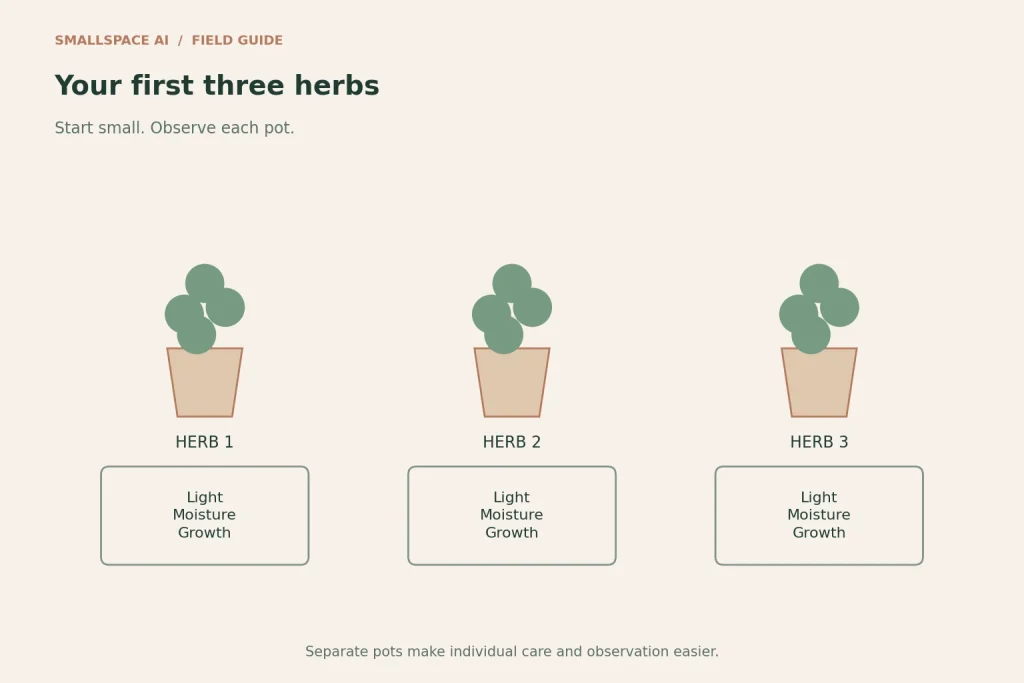
Illustration: an explanatory diagram, not a photograph or a construction drawing.
A small herb collection is easier to learn from than a crowded balcony full of unfamiliar plants. Begin with up to three herbs you actually use in the kitchen, in separate pots that you can reach and move when appropriate. Expand after you understand how the location behaves.
The three-pot diagram is a record-keeping idea, not a claim that every balcony can support the same herbs. Light, wind, temperature, available space and your building’s rules all affect the choice.
Record the light before choosing herbs
Observe the proposed position in the morning, around midday and later in the day. Note direct sunlight and shadow from railings, neighbouring buildings and the balcony above. Repeat when the weather allows; a compass direction alone does not describe how much light reaches a particular pot.
Take that information to a local nursery or compare it with the requirements for the exact herb and variety. Avoid a fixed list of supposedly easy plants when your location cannot provide their growing conditions.
Pick herbs for your cooking and climate
Write down which herbs you buy or cook with regularly. Then check which of those suit your light and seasonal temperatures. Start with young plants when that makes identification and establishment simpler for you, and retain their labels.
The RHS guide to herbs in containers notes that many herbs suit pots, but tender herbs such as basil need protection from frost. Its seasonal advice is UK-oriented; use your local frost dates and plant information rather than copying a calendar month across climates.
Keep different care needs separate
Separate pots let you adjust watering and location for each herb. They also make it easier to identify which plant is struggling. Do not crowd several plants into one decorative bowl before checking their mature size, root needs and growing-medium requirements.
Mint is often given its own container to manage its spreading growth; that does not remove the need for repotting and appropriate care. The RHS planting guide explains the usefulness of containers for spreading plants such as mint. Keep labels visible so a new herb cannot be confused with an ornamental plant.
Set up pots that can drain
Use containers and growing medium appropriate for the selected herbs, with drainage suited to the setup. A decorative outer pot can conceal water around an inner nursery pot, so check it rather than assuming the roots are dry because the surface looks dry.
Keep pots inside the balcony and away from positions where they could fall or create a climbing aid near the railing. Confirm permitted loading and arrangements with your building manager when needed. Plan runoff so it does not affect neighbours or block balcony drainage.
Make checking easier than guessing
Place the pots where you can inspect them without reaching over the railing or moving heavy furniture. Check moisture and plant condition regularly, adjusting to the plant and weather instead of watering all pots automatically on one rigid schedule.
The RHS watering guide recommends checking the container’s moisture and responding to conditions. Keep a simple note of watering and changes so you can learn which pot dries sooner in your location.
Learn from the first month
Photograph the plants periodically for your own comparison. Notice new growth, drying patterns and whether you actually use the herbs. Check plant-specific harvesting guidance before removing large amounts. Do not eat an unidentified plant or assume every decorative plant sold beside herbs is edible.
If the routine is manageable, add one suitable herb at a time. Use our container gardening starter guide for equipment and access planning, and balcony layouts to preserve room for both people and plants.
Leave a Reply