A Living Room Refresh Under $100: Reuse the Big Pieces
· SmallSpace AI Editorial
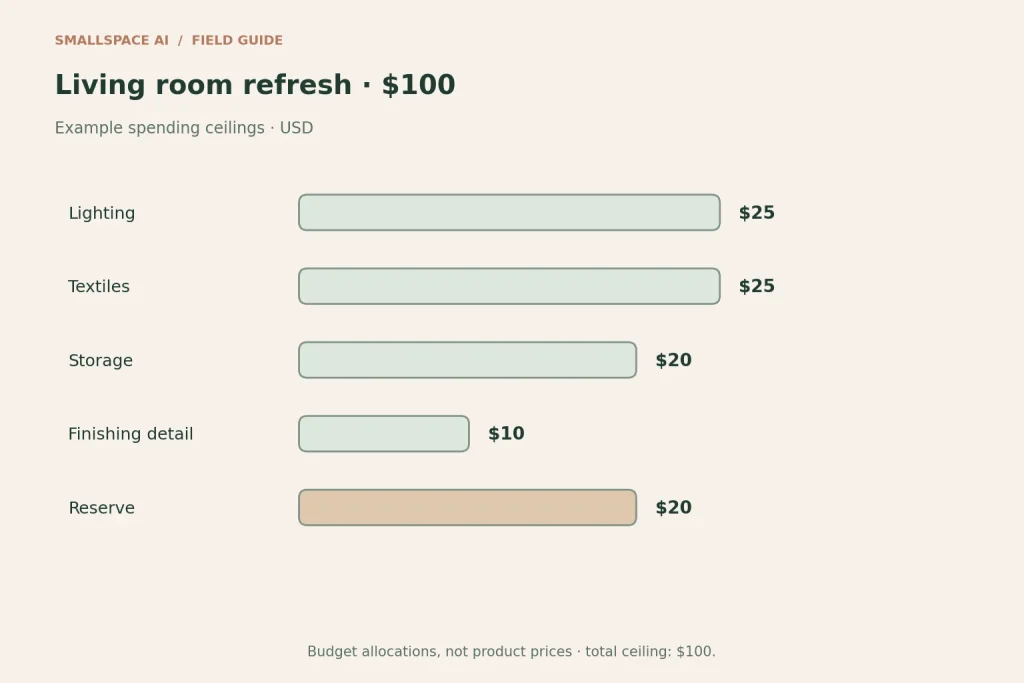
Illustration: an explanatory diagram, not a photograph or a construction drawing.
A limited living-room budget works best when it addresses a few specific problems. This plan keeps your existing sofa and essential furniture. It does not claim that a sofa, rug, lighting and storage can all be bought new for $100.
The amounts are US-dollar spending caps, not live prices or retailer offers. Check actual costs where you shop, including tax, shipping and any required accessories. Reuse or omit a category if suitable products exceed its cap.
Begin with the route across the room
Clear the walking route between the entrance, seating and any adjoining kitchen or balcony. Reposition a side table or basket if it makes the route awkward. Sit in your usual place and check access to a drink, a lamp and everyday items.
Use our sofa and TV layout guide before buying decor. A room that is easier to move through can feel improved without replacing a single large item.
Assign the $100 before choosing products
- Lighting: a ceiling of $25 for a task the current room cannot light well.
- Textile change: a ceiling of $25 for one compatible cover, throw or similar item.
- Useful storage: a ceiling of $20 for a clearly identified problem.
- Small finishing detail: a ceiling of $10, preferably using something you own.
- Tax, delivery and contingency: reserve $20.
The five allocations total $100. They are optional categories, not a shopping list you must complete. If lighting needs most of the budget, skip the decorative detail. Recalculate the full checkout total rather than comparing only the product prices.
Improve one lighting task
Identify whether the problem is reading, finding something on a shelf or an uncomfortable contrast between a bright ceiling light and a dark seating area. Try repositioning an existing lamp first. Keep cables away from routes and follow the lamp’s electrical and bulb specifications.
Do not improvise wiring or modify fixtures as part of a cheap refresh. If a safe, suitable lighting product costs more than the allocation, postpone another category or retain the existing arrangement until you can budget for the right solution.
Make textiles work with what stays
Choose a colour already present in the sofa, floor or curtains. Measure cushion inserts before buying covers, and check the size and care requirements of a throw. An inexpensive item that does not fit is still wasted money.
Avoid starting a chain of replacements. A new cover should not require a new rug, new curtains and new wall art to make sense. Keep the change focused on the problem you identified, such as a worn cover or an overly busy mixture of colours.
Spend storage money on a repeatable reset
If remotes, chargers and small objects spread across the table, give them a single reachable tray or container. If blankets accumulate on the sofa, use an existing shelf or suitable basket nearby. Check that accessing storage does not require moving the coffee table every time.
Our renter storage upgrade guide helps distinguish useful storage from another object to clean around. Buy one organiser first rather than an entire matching range.
Evaluate the result in everyday use
At the end of a normal evening, put the room back in order. Note what still has no home and which surfaces are still hard to use. Spend any remaining budget on that specific issue, not on filling the last empty corner.
Keep receipts and check returns before buying. A successful small refresh preserves comfortable seating, clear routes and easy access while reducing visual clutter. It can cost less than the ceiling, and it does not require every item to be new.
Leave a Reply